
Published: February 6, 2026
By: Kai Peng Huang, Technical Specialist at Cymber Metal
After working with brass alloys day in and day out at Cymber Metal, I’ve seen how versatile this family of materials really is. From the rich golden shine of low-zinc grades to the tough, seawater-resistant naval brasses, each type has its sweet spot. Brass gives us that perfect mix of beauty, workability, strength, and cost that few materials can match. In 2026, with sustainability pushes and stricter regulations, brass remains a go-to for everything from decorative trim to critical plumbing and marine parts.
This final brass guide pulls together what we’ve learned across the series—focusing on real-world applications, key advantages, and how different grades perform in various industries. It’s based on hands-on experience with thousands of parts we’ve produced here.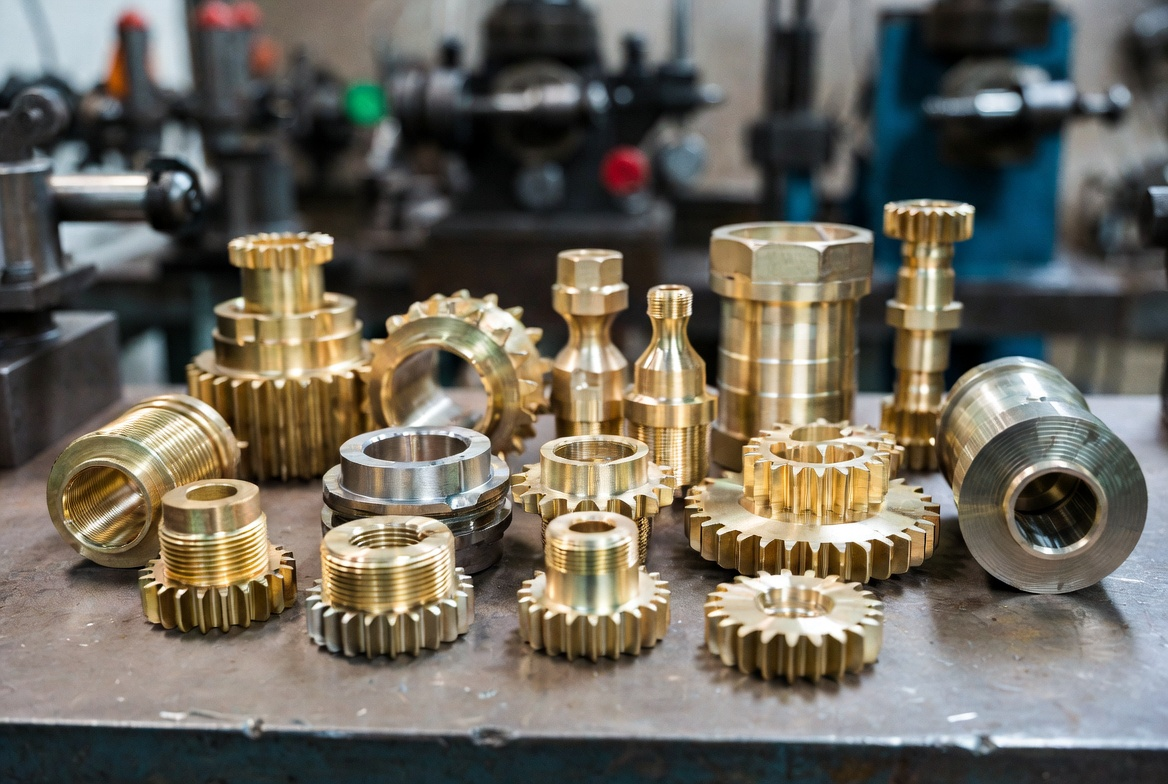
Brass Alloy Grade Overview and Industry Fit Table
Here’s a quick reference we’ve put together from shop experience—showing how common grades align with industries:
| Grade Family | Zinc Content | Key Advantages | Primary Industries | Typical Applications | Machinability/Formability |
|---|---|---|---|---|---|
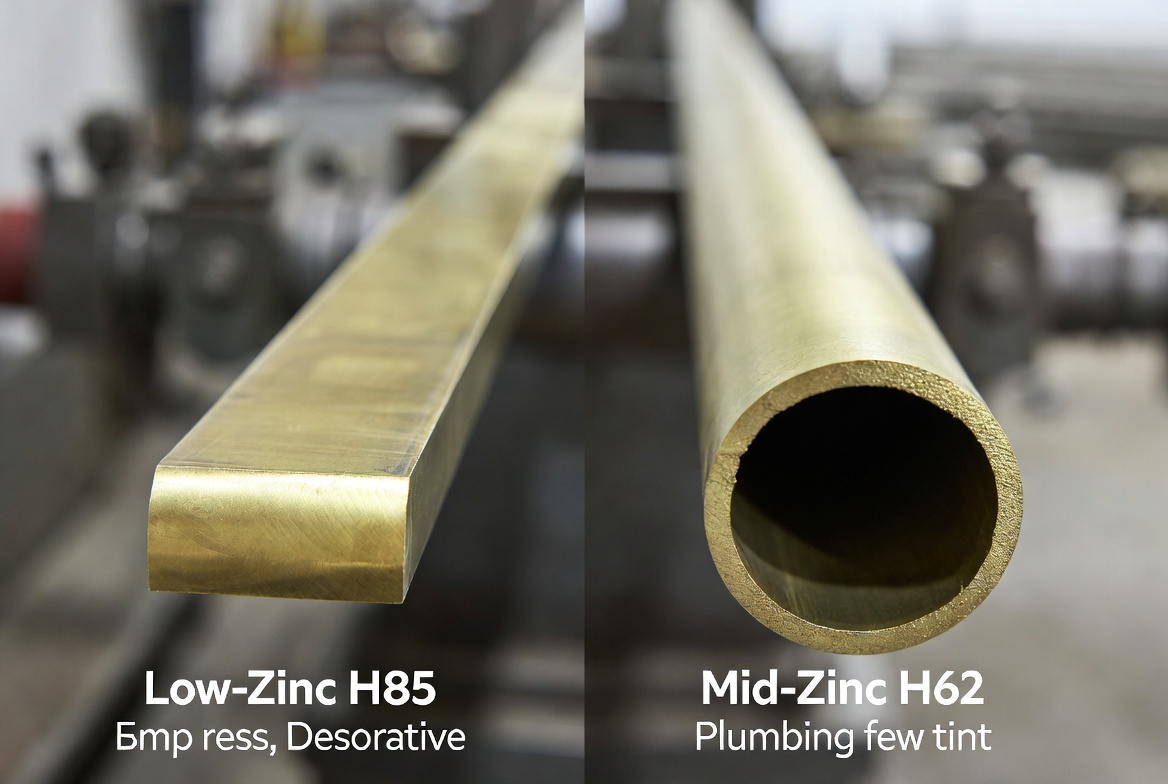
| Low-Zinc (H85/H75) | 15–25% | Rich golden color, excellent cold forming | Decorative, architectural, instruments | Strips, tubes, decorative trim | Excellent cold work |
| Mid-Zinc (H62/H59) | 38–40% | Balanced strength, good extrusion/machining | Plumbing, hardware, locks | Tubes, fittings, valves, lock parts | Excellent |
| High-Strength Naval | ~40% + Tin | Superior seawater corrosion resistance | Marine, offshore | Fittings, valves, propeller hardware | Good |
| Lead-Free Bismuth | Variable + Bi | Easy cutting without lead, compliant | Potable water plumbing | Valves, fittings, connectors | Excellent |
Quick Insight: Low-zinc for looks and forming; mid-zinc for everyday strength; naval for harsh environments; bismuth for lead-free compliance.
Brass Advantages Across Industries
Brass stands out for these core benefits we’ve seen consistently:
- Aesthetic appeal → Warm golden tones that polish beautifully and age gracefully.
- Excellent workability → Easy to machine, form, extrude, or draw.
- Corrosion resistance → Good in water, air, and mild chemicals (enhanced with tin in naval grades).
- Strength balance → From ductile low-zinc to tougher high-zinc/naval.
- Cost-effectiveness → Affordable with high recyclability.
- Compliance ready → Lead-free options for regulations.
Now let’s break down how these play out in key industries.
1. Architectural and Decorative Applications
Low-zinc brasses like H85 and H75 shine here—literally. Their deep golden color and superior cold formability make them perfect for trim, handrails, and luxury hardware.
Advantages in this field:
- Unmatched polishability for mirror finishes.
- Ductility for complex bending and rolling without cracks.
- Natural patina or lacquer options for longevity.
Common Parts: Decorative strips, profiles, furniture accents, lighting fixtures.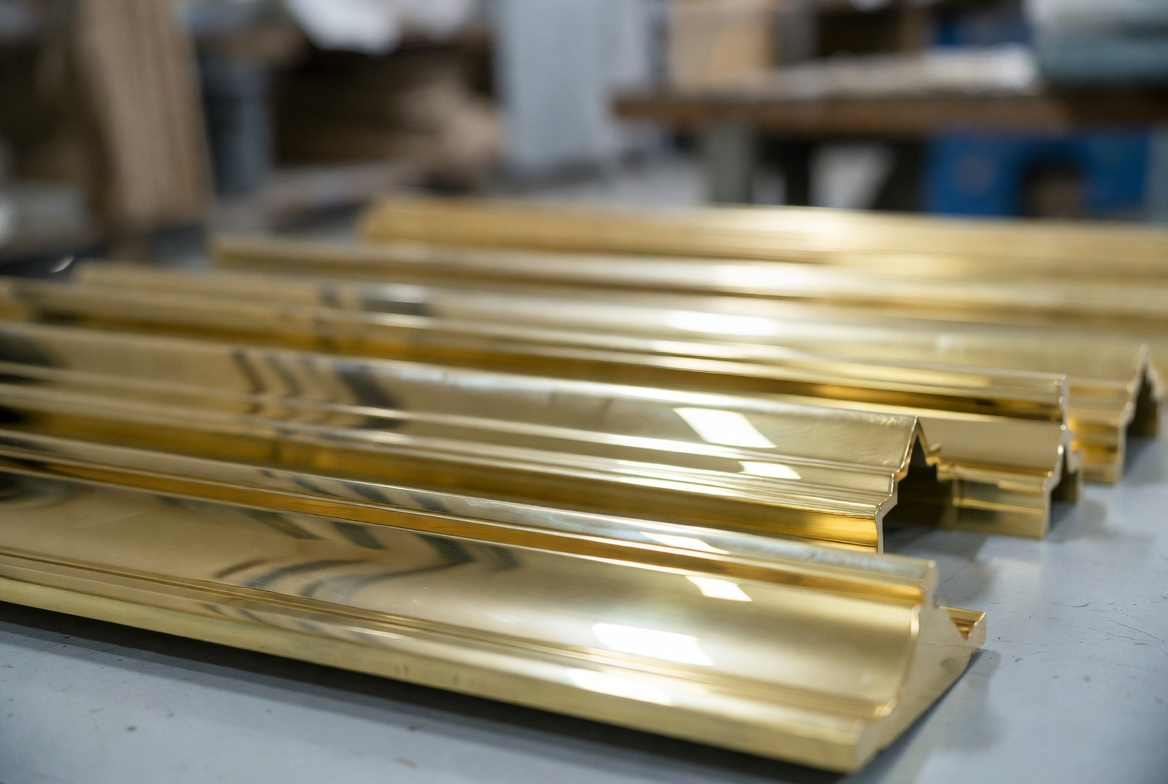
2. Plumbing and Water Systems
Mid-zinc H62/H59 and lead-free bismuth brasses dominate plumbing for strength and compliance.
Advantages:
- Good pressure resistance in fittings.
- Easy threading and machining for valves.
- Lead-free options safe for drinking water.
Common Parts: Tubes, valves, fittings, connectors.
3. Marine and Offshore
High-strength naval brass (C46400) is essential—tin addition stops dezincification in saltwater.
Advantages:
- Excellent corrosion resistance in seawater.
- Strength for load-bearing hardware.
- Non-sparking for safety.
Common Parts: Fittings, valves, propeller nuts, deck hardware.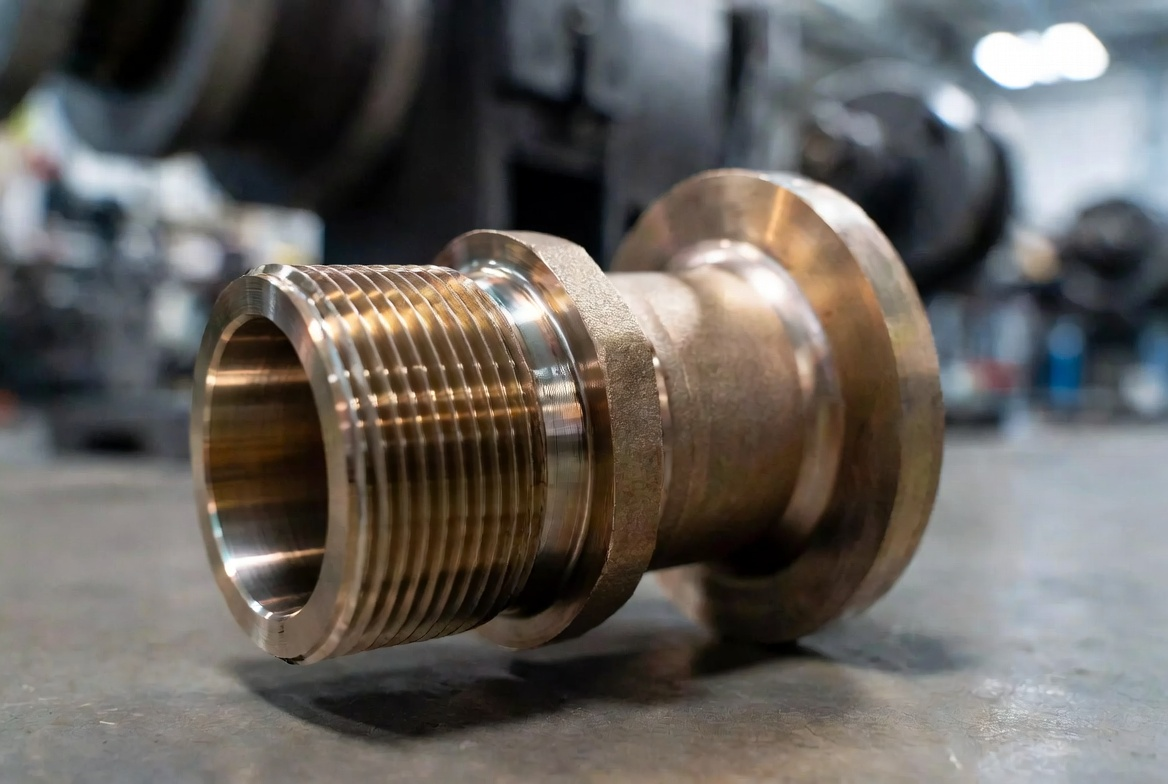
4. Locks, Security, and Hardware
H59 and similar grades for their hardness and machinability.
Advantages:
- Wear resistance in moving parts.
- Precise threading for cylinders.
- Strength against tampering.
Common Parts: Lock cylinders, keys, hardware bolts.
5. Musical Instruments and Precision
Low-zinc for tone and formability.
Advantages:
- Warm acoustics from ductility.
- Easy drawing for tubing.
- Beautiful finish.
Common Parts: Mouthpieces, bells, tubing.
6. Electrical and Easy-Cutting Applications
Bismuth lead-free for compliance; general brasses for connectors.
Advantages:
- Good conductivity with strength.
- Easy cutting for high-volume parts.
Common Parts: Connectors, terminals.
Engineering Experience: Over the years at Cymber Metal, we’ve helped customers switch from leaded to bismuth brass for plumbing valves—maintaining machinability while meeting lead-free rules. One project for European water fittings cut tool wear with coated carbide and kept cycle times close to old leaded grades.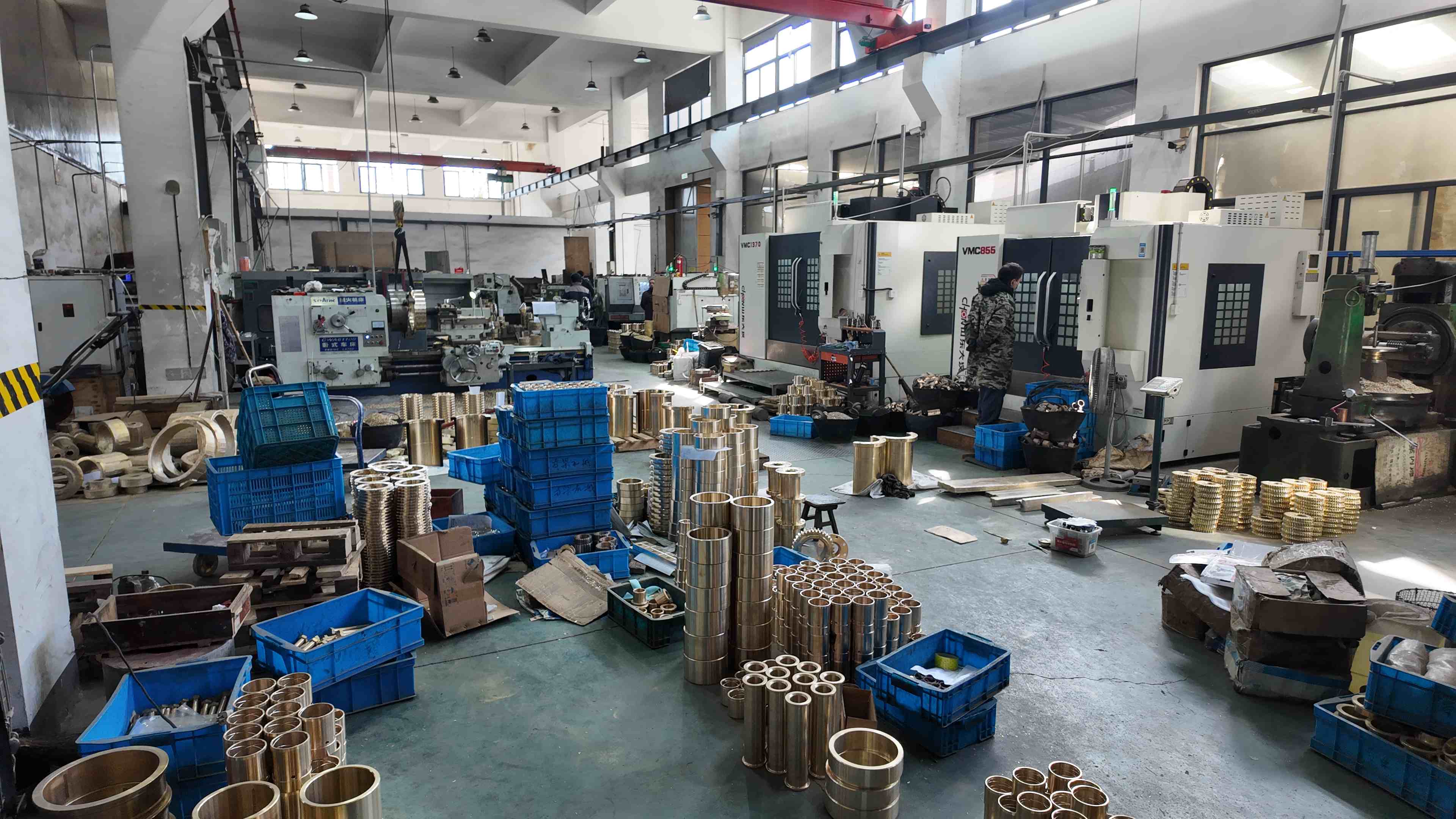
Common Deliverable Brass Parts Across Industries
- Decorative strips and trim (low-zinc)
- Plumbing tubes and valves (mid-zinc, lead-free)
- Marine fittings and hardware (naval)
- Lock cylinders and components (H59)
- Instrument tubing and parts (low-zinc)
- Electrical connectors (bismuth/ general)
Final Thoughts on Brass in 2026
Brass alloys continue to deliver reliable performance across industries—beautiful, workable, strong, and increasingly sustainable with lead-free options.
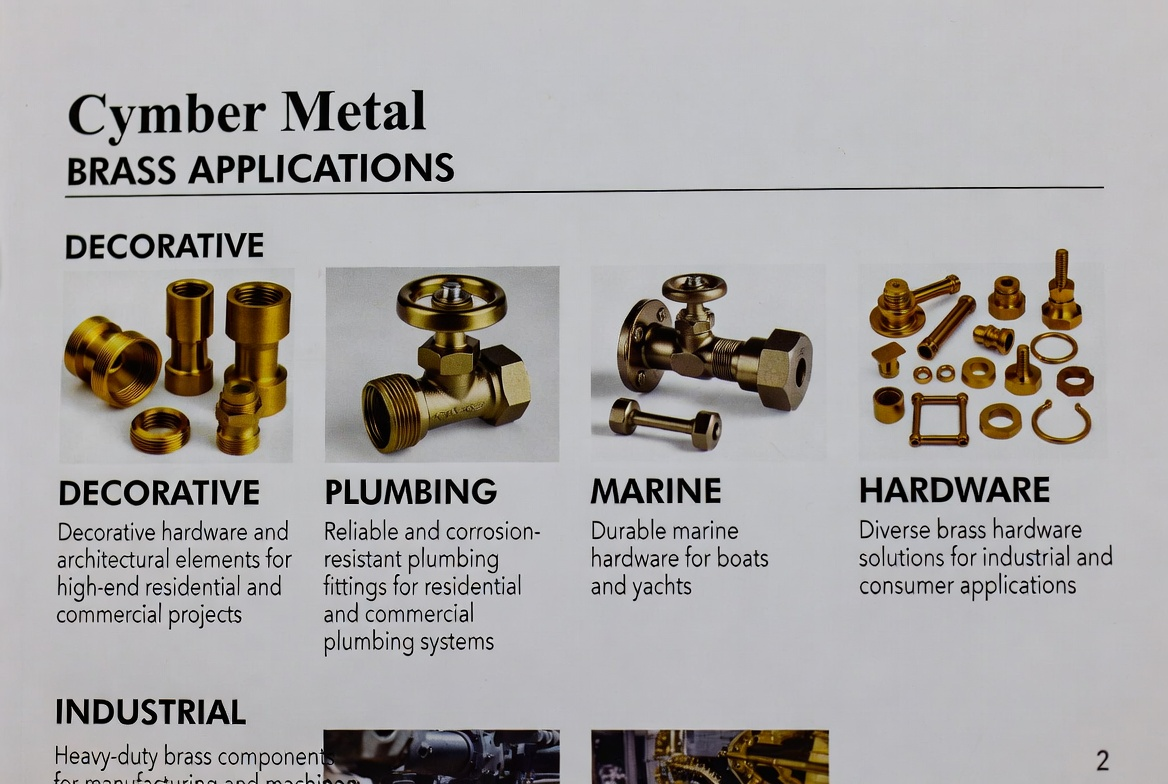
If you’re sourcing brass for any application—decorative, plumbing, marine, or custom hardware—Cymber Metal offers the full range of grades, expert processing, and flexible volumes from prototypes to production.
Ready to explore options? Download our complete brass alloys catalog for detailed specs and examples, or contact our technical team for quotes and support.
Download 2026 Brass Alloys Product Catalog (PDF)
Post time: Feb-06-2026